New nonfiction by Chris Enss
How the West Was Stunt-Doubled
Chris Enss
America’s earliest movie creators learned quickly that audiences expected to see more than just a few pretty faces on flickering screens. Moviegoers wanted action, danger, heart-stopping shootouts, and startling displays of horseback heroics.
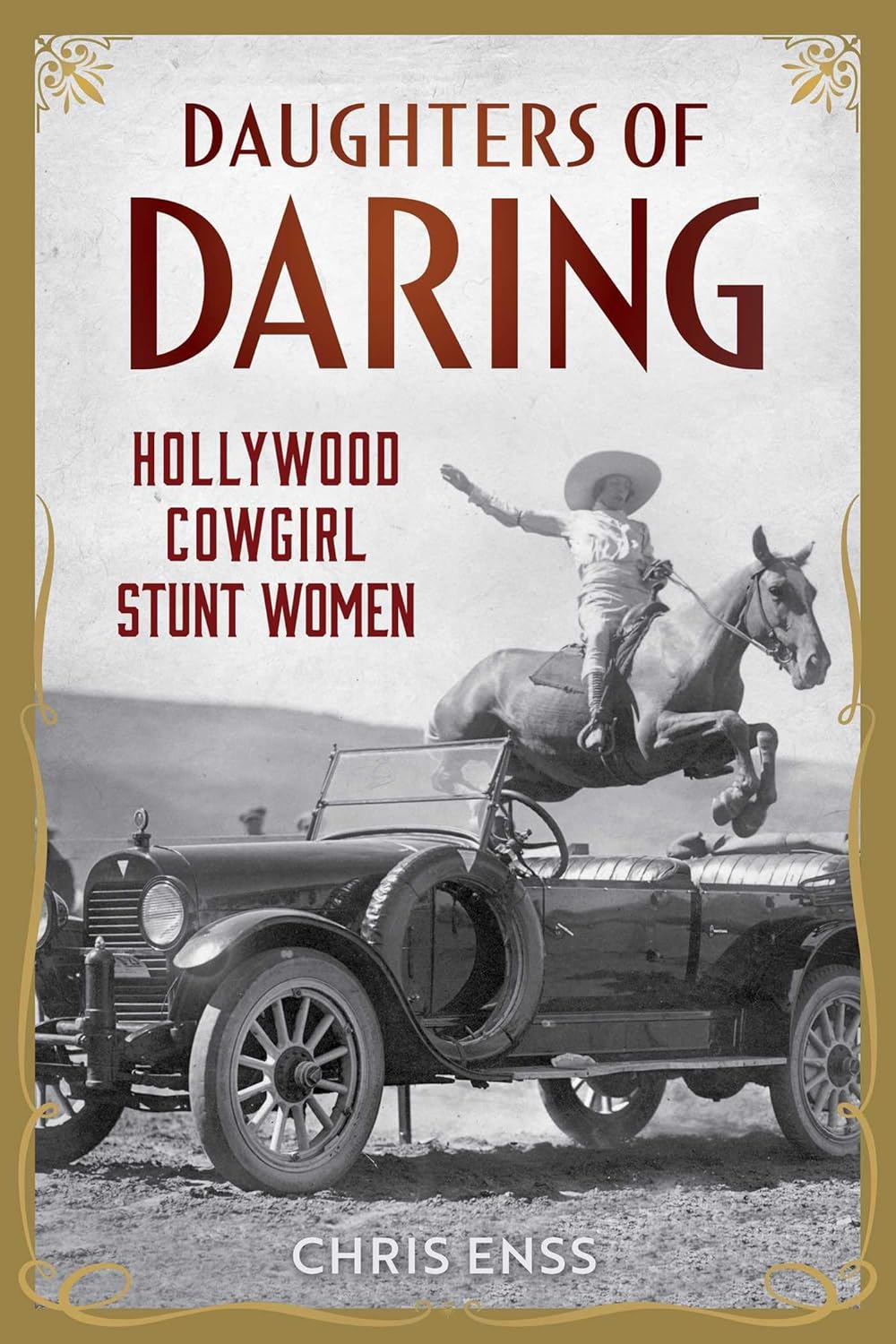
Chris Enss’s lively new nonfiction work, Daughters of Daring: Hollywood Cowgirl Stunt Women, delivers eye-opening looks inside the risky careers of more than two dozen female horse riders who became stunt performers in the early decades of the 20th century.
Filmmakers could not jeopardize the looks, careers, and lives of their high-paid stars by making them actually fall off horses or roll down dusty hills. But stunt doubles could take those risks—and more—at very low cost to a movie’s budget.
Some of the intrepid young women who became stunt doubles for well-paid movie stars were self-taught. Others had learned trick riding skills while working in open-air vaudeville shows such as “Buffalo Bill’s Wild West” and Oklahoma’s “101 Ranch Wild West Show.”
In either case, “Hollywood couldn’t have gotten along without them,” Enss contends. “Many cast as stuntwomen were fated to spend a considerable amount of their motion picture career accumulating a large variety of cuts and bruises. Even when they were granted a small speaking part, there was always a fall, a dive, or a wagon collision to go with it. Talented stuntwomen took backward, forward, head-first, and feet-first falls into water, ditches, and nets, over chairs and tables, from the tops of pianos, out of high windows, through trapdoors, and down haylofts. Some rode wild horses; worked with bears, goats, pigs, and cows; and chased donkeys and steers. They doubled for such luminaries as Joan Crawford, Barbara Stanwyck, and Jean Arthur.”
It was a risky arrangement to be a stuntwoman. To get paid, a stuntwoman had to create a stunt, negotiate a price for it, rehearse it, and successfully pull it off on camera. If you got hurt and could no longer work, you were just out of luck.
The stuntwomen profiled in Daughters of Daring include five who rode in the Wild West shows, six who did stunts in the silent-movie days, and six who were standouts in “the talkies,” the movies made after the introduction of sound revitalized the motion picture business.
Helen Gibson, Texas Guinan, and Ruth Roland are three examples of Enss’s focused profiles. Gibson, who grew up near Cleveland, Ohio, is “recognized by film historians as the first professional American stuntwoman,” Enss notes. Guinan, a Waco native, preferred to have speaking parts in movies and but often did her own stunts; and Ruth Roland, a San Franciscan who became known as “the queen of the early movie serials.”
In 1921, Guinan formed her own film company and produced and starred in numerous Western shorts. “I had twelve real cowboys, a scenario writer, a cameraman, a carload of cartridges, my horse ‘Waco’ from Texas, and went to work. We made a picture a week,” she remembered years later. “We never changed plots, only horses.”
Regarding Roland, Enss writes: “Whether in chaps or an elegant gown, Ruth was always just a hair’s breadth away from the most appalling situations in her pictures. Her director, with an astute comprehension of how to build suspense, would leave her tied to a railroad track with the express thundering around the bend or leaping on horseback from the edge of a cliff to escape a fate worse than death.”
Daughters of Daring is fun, informative reading. It offers significant insights into how experienced stuntwomen helped shape and boost the motion picture business in the Southwest and kept audiences coming back for more.