

Texas Reads Westerns with Preston Lewis
These Westerns provide an expansive look at the breadth of the Texas frontier experience and the resulting Texas character and spirit. These classics are necessary to understand the state’s historic roots. The first three are well known while the final three are more obscure and, unfortunately, out of print, though they can be found in used bookstores.
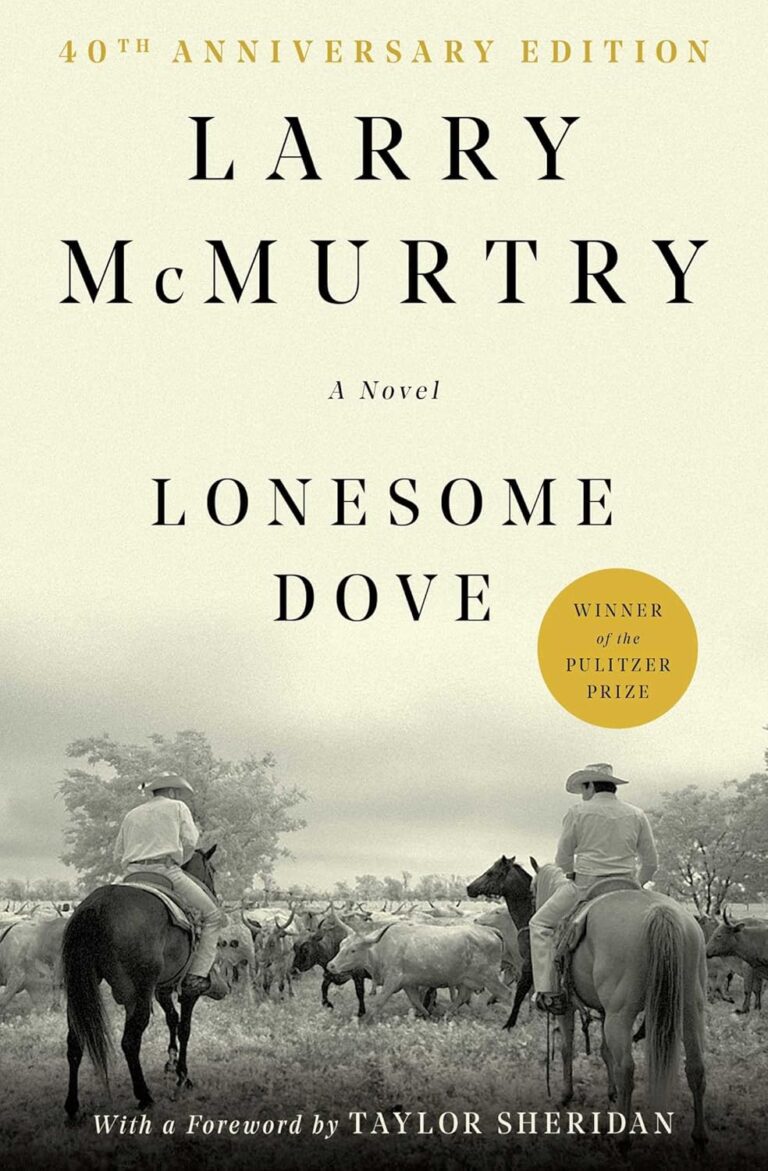
Lonesome Dove (Larry McMurtry, 1985)
Any list of Western books on the Lone Star State begins with Lonesome Dove, Larry McMurtry’s Pulitzer Prize-winning classic on 19th century Texas. There is a certain irony in the success of McMurtry’s classic novel as a decade before its publication, the author said Texas literature would never reach its full potential until it abandoned homages to the Old West and turned its attention to more modern and urban topics.
Perhaps he was trying to throw other authors off the cattle trail, but his epic work transforms the cattle drive into a meditation on friendship, mortality and the passing of the American frontier. Though he honors the Old West tradition,
McMurtry also exposes its myths, showing how violence, loneliness, and loss often underpin the heroism we have come to associate with traditional Western morality tales. Even so, he neither diminishes nor demeans the courage or spirit that make the story distinctly Texan.
Lonesome Dove captures Texas as memory and myth, not only showing the grandeur of the open range era but also the passing of its heroes and their time. Augustus “Gus” McCrae and Woodrow Call embody two sides of the Texan psyche—the gregarious philosopher and the stoic doer. Their friendship mirrors the tension between independence and duty that lies at the heart of Texas identity. Lonesome Dove redefined the Western novel for contemporary readers and inspired more writers to explore Texas history with both realism and reverence.
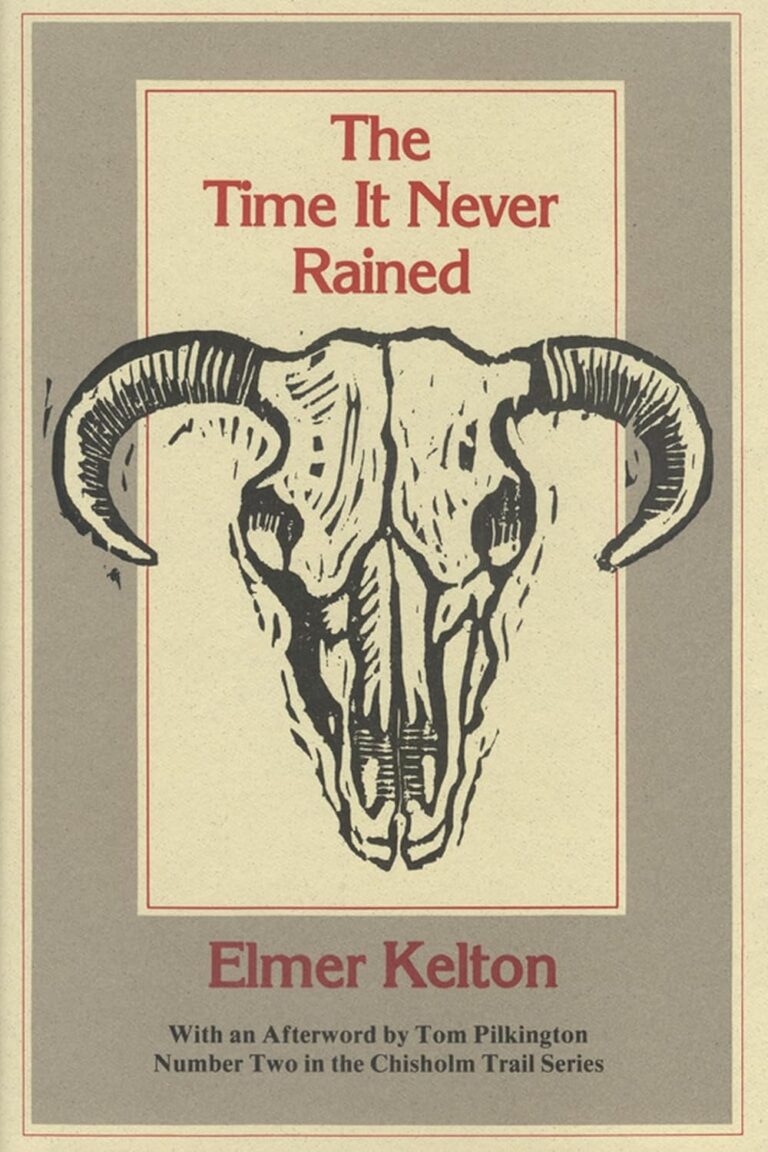
The Time It Never Rained (Elmer Kelton, 1973)
While Lonesome Dove was populated by a variety of traditional villains, the devastating West Texas drought of the 1950s is the primary antagonist in Elmer Kelton’s classic The Time It Never Rained. Kelton’s novel is the most authentic depiction of 20th century Texas ranch life ever written, bringing the Western into a new era with more complex challenges that could not be settled with a gun.
Kelton’s protagonist, Charlie Flagg, is an old-fashioned rancher who clings to past traditions demanding his rugged independence in a time when the growing complexities of modern ranching make economic survival more dependent on other entities, including the government. Though times and conditions have changed due to the drought, Flagg refuses governmental aid, symbolizing the rugged independence that shaped Texas ranching culture.
The Time It Never Rained explores themes of pride and self-reliance, core principles of the Texas spirit and ethos. Kelton treats these not as clichés but as moral dilemmas, showing the price of integrity when modern pressures and the encroaching governmental bureaucracy threaten traditional ways. The Time It Never Rained demonstrated that Texas heroism can lie not in gunfights but in endurance.
Kelton wrote with unmatched realism about land, livestock, and weather, an authenticity derived from his childhood on a West Texas ranch and his career as an agricultural reporter for the San Angelo Standard-Times and then Livestock Weekly, writing his Westerns on the side until he retired.
Voted by his Western Writers of America peers the greatest Western writer of all time, Kelton penned more than 60 Westerns, most set during the 19th century. None of those traditional Westerns resonated with Kelton as much as this one. On his grave marker is inscribed “Author of The Time It Never Rained.”
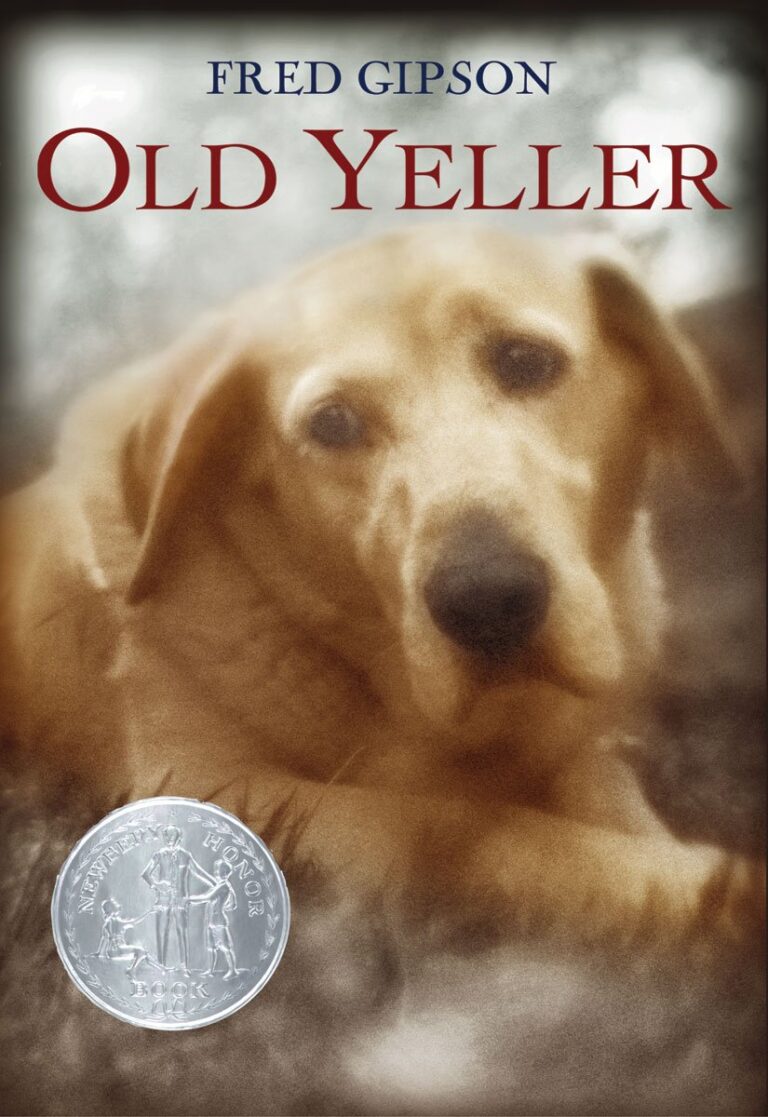
Old Yeller (Fred Gipson, 1956)
Set in post-Civil War frontier Texas, Old Yeller views the pioneer experience through the eyes of young Travis Coates while his father is away on a cattle drive. The novel portrays the realities of frontier survival—hunger, danger, isolation—with honesty and warmth through the evolving relationship between Travis and a stray cur dog he names “Old Yeller.”
Though often remembered for the heartbreaking ending in the 1957 Disney screen adaptation of the same name, Old Yeller endures as a classic of YA literature because it captures love, responsibility, and the loss of innocence in a uniquely Texas context. The bond between Travis and his mongrel mirrors the relationship between settlers and their land, always demanding and sometimes sacrificial.
Author Fred Gipson, a native of the Texas Hill Country, writes in the plain, direct idiom of the people he knew growing up, neither demeaning nor romanticizing frontier life. Instead he honors the hardships of pioneering and shows the moral clarity it engenders. The novel and the subsequent Disney film introduced readers worldwide to the Texas frontier. Old Yeller remains a children’s and Lone Star State classic because it authentically represents Texas history, values and speech.
Beneath its simple plot lies a profound allegory of frontier virtue—courage, loyalty, and duty—that defines much of the Texas character across generations. Old Yeller presents Texas as an environment where family, loyalty, and loss forge strength of character. After Old Yeller becomes rabid after fighting a wolf, Travis is forced to shoot his beloved dog, symbolizing the sacrifices necessary to survive on the frontier.
Old Yeller’s death symbolizes the inevitability of loss faced by every Texas family on the frontier. The subsequent birth of Old Yeller’s pup named “Young Yeller” by Travis reminds us that life, even on the dangerous frontier, renews itself just like the resilient Texas spirit.
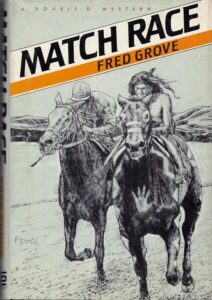
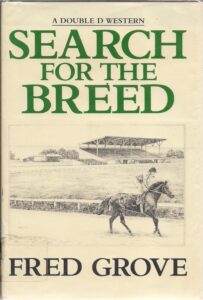
The Great Horse Race, Match Race, Search for the Breed (Fred Grove, 1977, 1982, 1986)
While McMurtry, Kelton and Gipson were native Texans, Western writer Fred Grove was born in Hominy, Oklahoma, and set his novels primarily in Kansas, Indian Territory and Texas. I consider The Great Horse Race, Match Race, and Search for the Breed his horseracing trilogy with the recurring characters Dude McQuinn, a gritty Texan with a wry sense of humor; jockey Coyote Walking, a Comanche born in Indian Territory; and Kansan horse trader Uncle Billy Lockhart.
The trio travel the region, making their precarious living by trading and racing horses. The trilogy uses horse racing as a lens to illustrate the Texas spirit and pride, both seasoned with a Texan sense of humor and heightened by racing braggadocio and chicanery. The author’s cast includes mixed-heritage cowboys, Indians, small-time dreamers, drifters and minorities often unseen in other Western novels, showing that the Texas spirit is not owned by any single class or race but rather shared by all with a dream for a better tomorrow.
Grove’s tone recalls Mark Twain more than Zane Grey, mocking pretension while celebrating ordinary courage and initiative. His humor both humanizes the frontier in a way few writers manage and shows a sly smile often is hidden behind Texas braggadocio. His racing novels remind us that the Texas story extends beyond conflict, hardship and death to ingenuity, rivalry, and ambition. In his trilogy victory is measured as much by heart as by the finish line.
The racing trilogy deserves recognition in Texas literature because the three novels capture with humor and moral clarity the democratic energy of the frontier and reaffirm that everyone in Texas can run the race and succeed if they possess the grit, the horse, and the heart.
Taken together the books of the four authors provide a nuanced but expansive portrait of the Texas frontier and its legacy. In Lonesome Dove Larry McMurtry gave Texas its Iliad and Odyssey, capturing Texas as myth and memory while exploring the grandeur of its open range and the passing of its heroes.
By contrast, Elmer Kelton in The Time It Never Rained provided Texas its Book of Job, delivering a moral compass with its subtle heroism and tenacity facing the growing complexities of a changing world. Kelton writes with an authenticity where pride and endurance define the soul of Texans.
In Old Yeller Fred Gipson contributed to Texas literature the classic frontier coming of age story. Travis Coates is to Texas what Huck Finn was to the Mississippi River, an archetype of frontier Texas boyhood and the difficult choices of youth.
Through his horseracing trilogy, Fred Grove gave Texas a folk epic, providing tales where decency and shared humanity prevail over pride and prejudice. His literary gift is written with the wry sense of humor that reflects a sly smile behind much Texas braggadocio.

Preston Lewis is an award-winning Texas author and historian with more than 50 published fiction and nonfiction works, including Westerns, historical novels, and young adult books. He is a member of the Texas Institute of Letters and a recipient of multiple Spur, Elmer Kelton, and Will Rogers Medallion Awards.